
See it
in action.
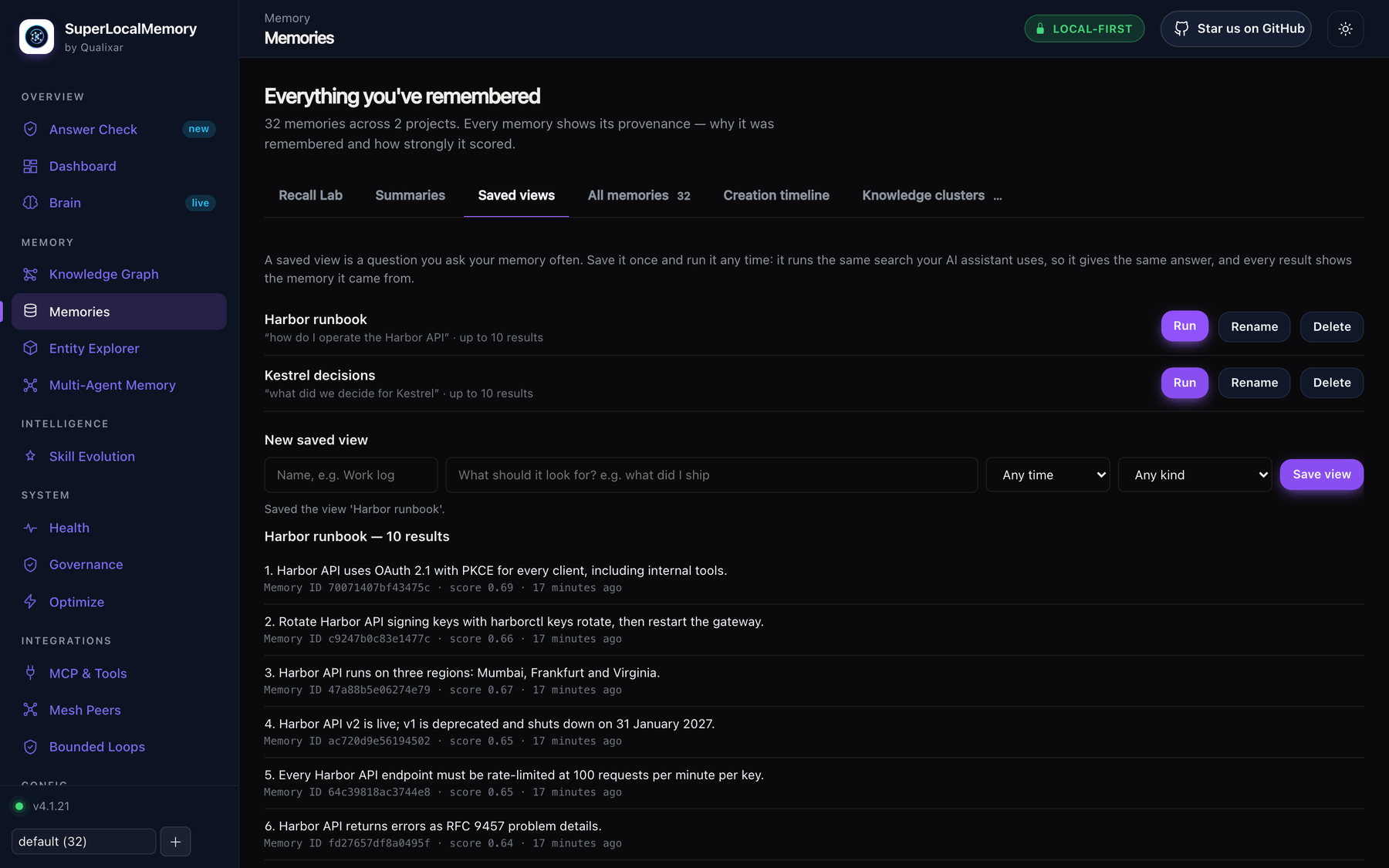
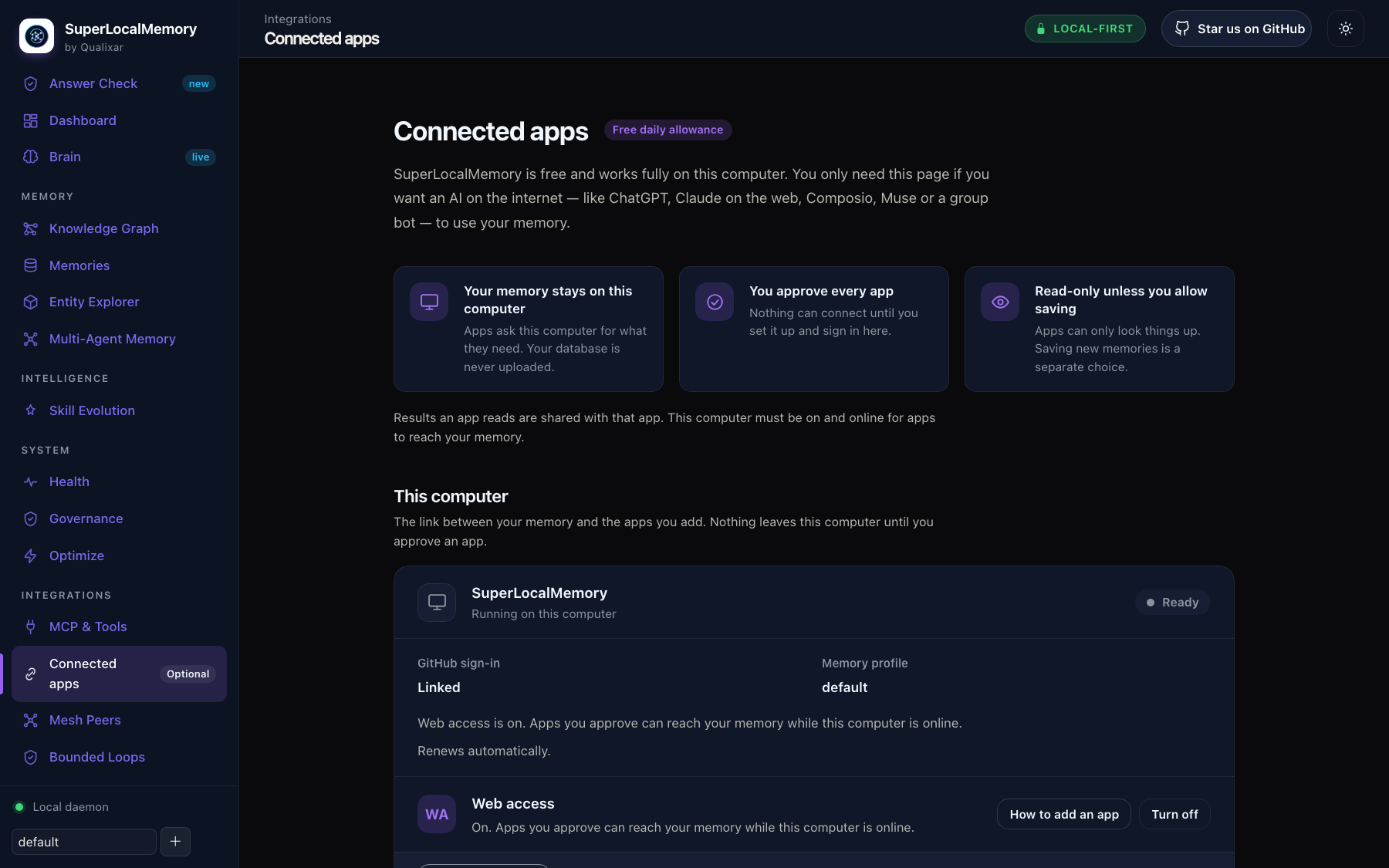
Rent the LLM. Own the memory. Watch the full eight-minute demo, then see the real dashboard: an answer check that says “I don’t have that”, Recall Lab, memory kinds, saved views and Connected apps.
One memory for every AI agent and bot. The full demo.
Claude Code, Codex, Cursor, ChatGPT and Grok Bot share one local memory. Every tab, light and dark: recall, the knowledge graph, the answer check, SLM Mesh, governance, caching and compression.
Real screens.
Nothing mocked.
Captured from a real install in Mode A, with Laya running on the Mac and a store of fictional project memories. Each verdict, score and timing is what SLM returned.
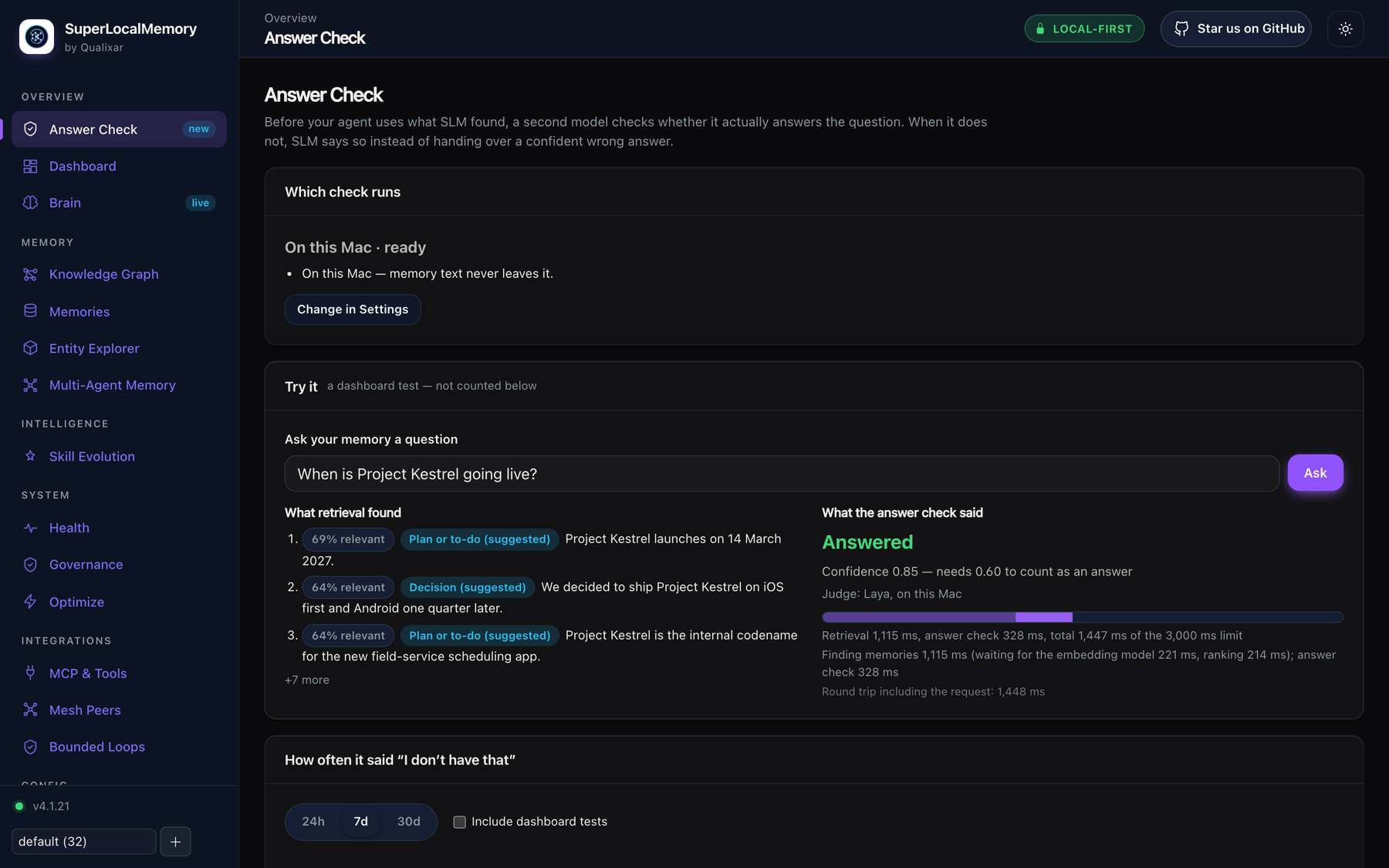
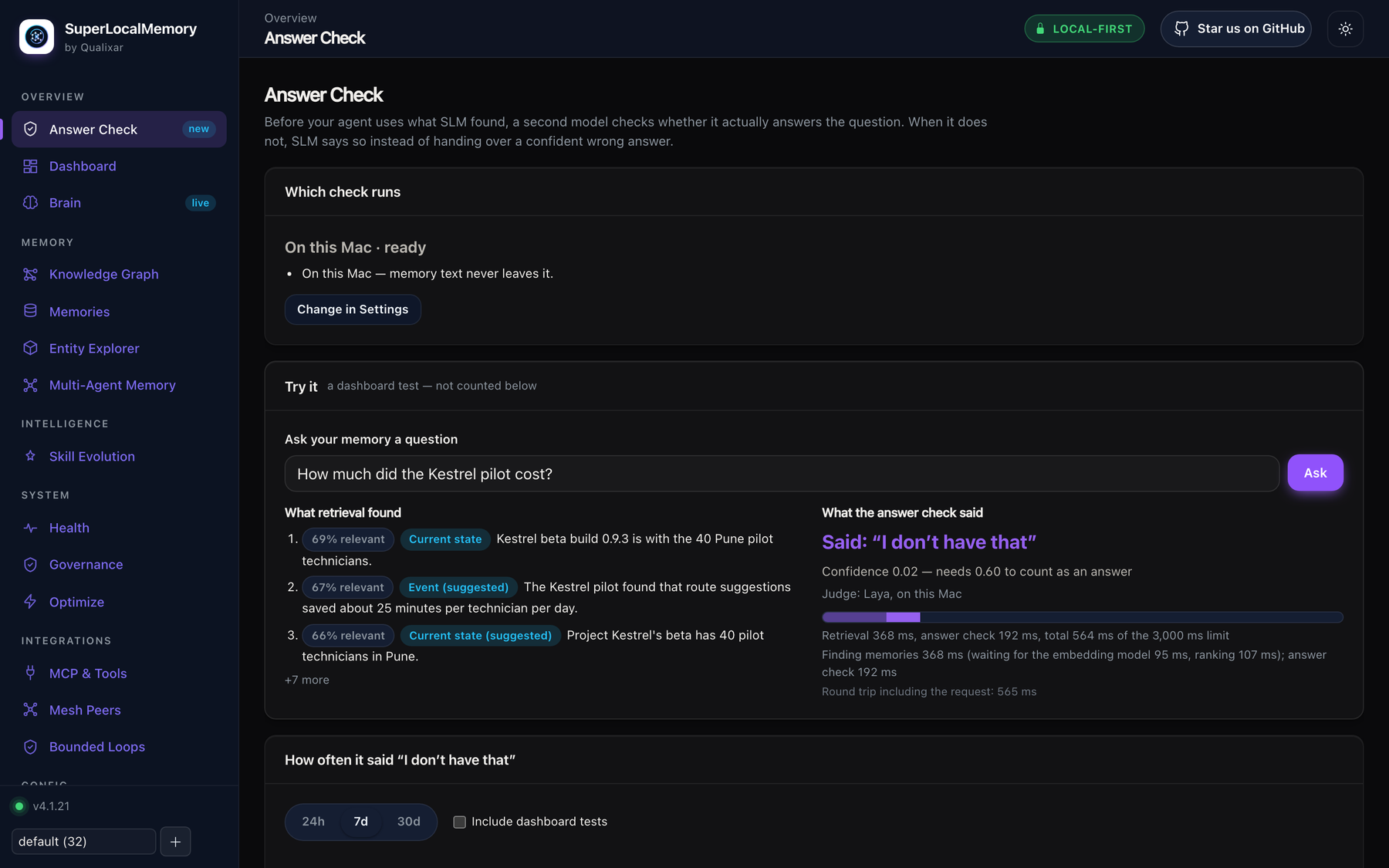
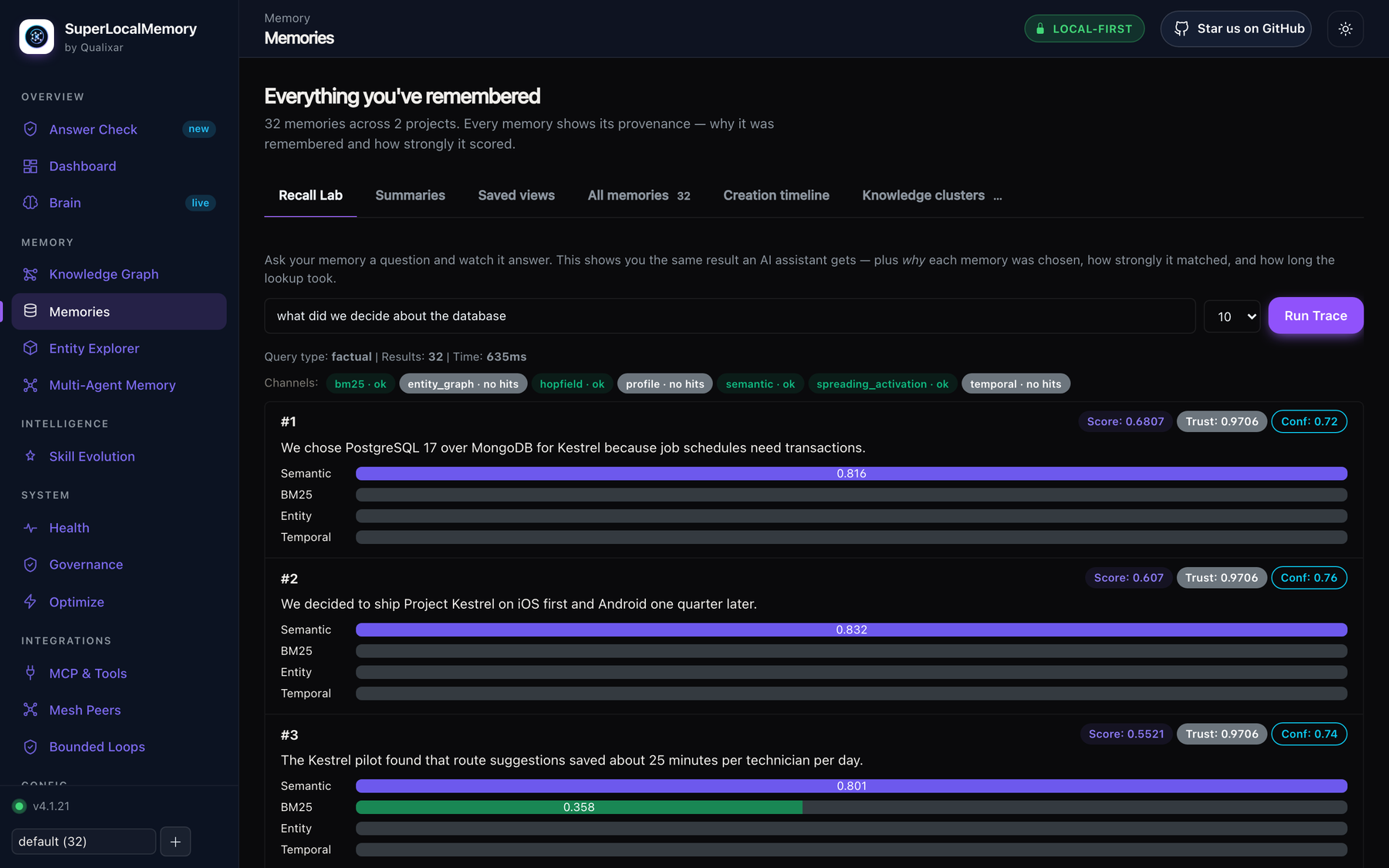
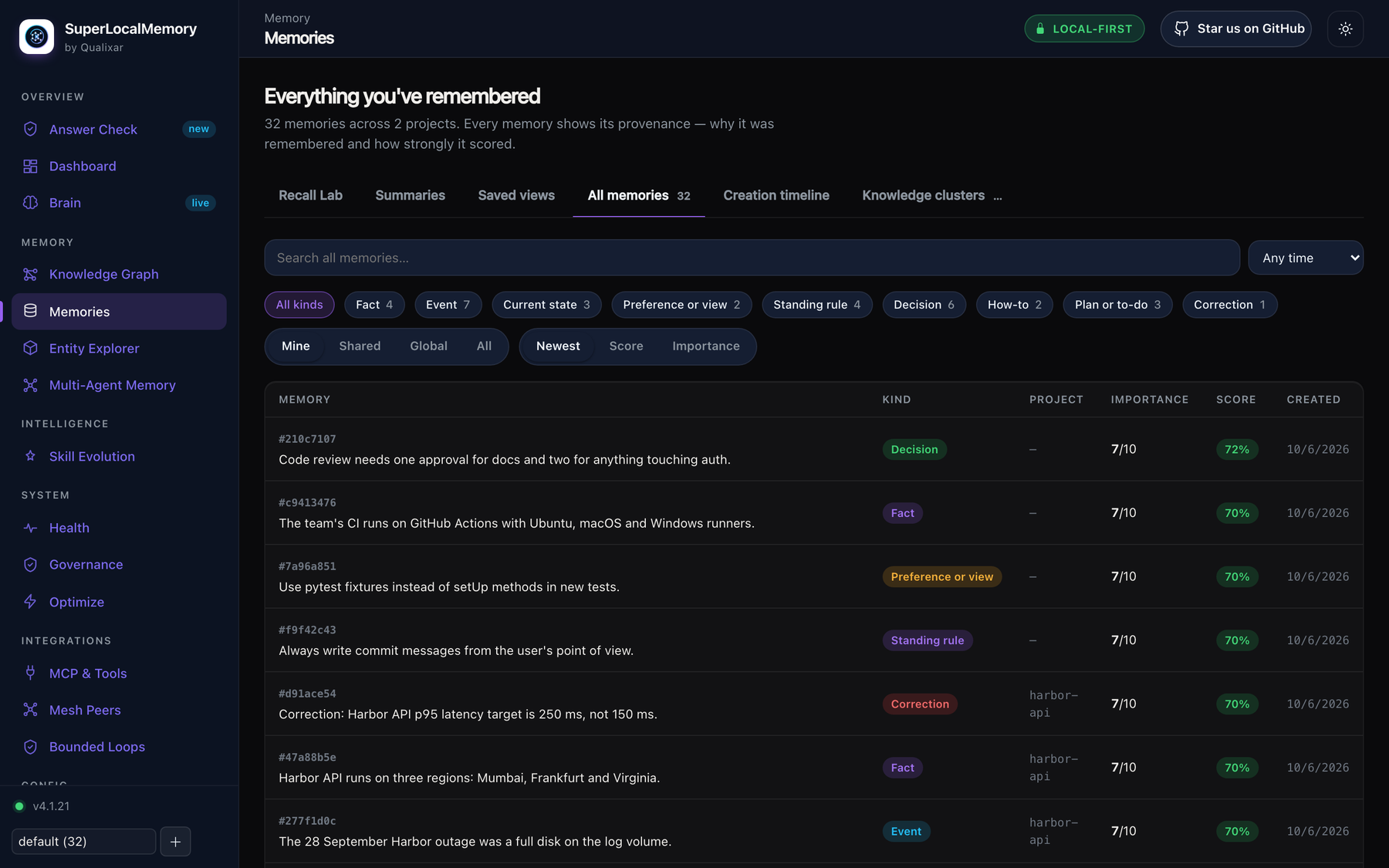
Pick a capability.
Three documented command flows. Click a tab to inspect the interaction, then validate the same command on your installed release.
Built for how you actually work.
Whether you're on a team, solo, or building agents — SLM slots into your workflow without friction.
Engineering Teams
Persist architecture decisions, API contracts, and bug resolutions across sessions, then inspect what the next session actually recalls.
Solo Developers
Build a searchable memory of everything you've ever debugged, decided, or documented. Your personal engineering knowledge base.
AI Agent Pipelines
Give autonomous agents persistent context that survives session boundaries through a local core memory path; optional providers and connectors are configured separately.
Measured. Published. Reproducible.
Published LoCoMo evidence is carried over with its original evaluation scope disclosed beside every number.
LoCoMo is a long-context conversation memory benchmark. Results published in arXiv:2603.14588.
Explicit client configuration.
Three lines or fewer to connect SLM to your tool of choice. Copy, paste, done.
Ready to try it?
Two commands: npm install -g superlocalmemory, then slm setup. The core is free, open source and local-first.